

GVSC Director Michael Cadieux Highlights Digital Engineering as the Catalyst for Continuous Army Transformation
For more than three decades, the Automotive Research Center (ARC) has helped the U.S. Army address increasingly complex engineering challenges through modeling, simulation, and digital engineering. Today, as artificial intelligence, autonomy, and increasingly interconnected systems redefine how military capabilities are conceived, developed, and sustained, that mission has become more important than ever.
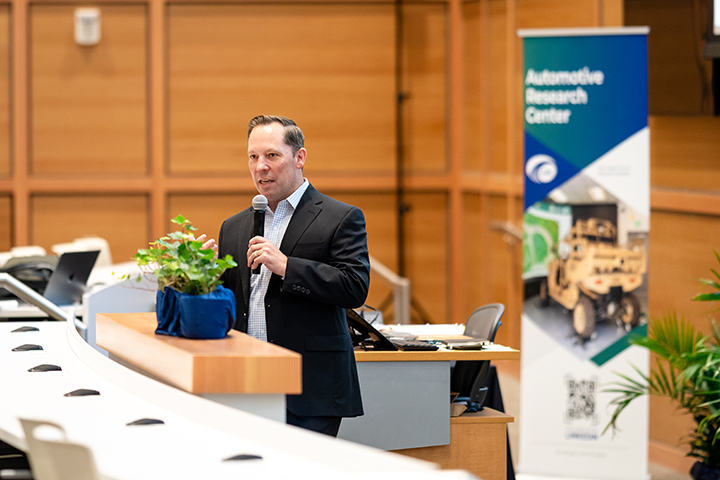
Opening the 32nd Automotive Research Center (ARC) Annual Program Review in Ann Arbor, Michigan, Michael Cadieux, Director of the U.S. Army Ground Vehicle Systems Center (GVSC), challenged participants to think beyond digital engineering as simply another engineering methodology. Instead, he described it as the foundation of a new innovation ecosystem capable of connecting research, design, manufacturing, experimentation, sustainment, and operational capability into one continuous pipeline.
“The only way that we’ll be able to achieve that is through the use and implementation of digital engineering tools throughout the lifecycle."
His remarks established the central theme of this year’s Annual Program Review—Digital Engineering for Automation through AI—while framing a broader challenge facing both the Army and industry: how to modernize increasingly complex systems at the speed demanded by rapidly evolving technologies and operational environments.
Throughout his address, Cadieux challenged the audience to think of digital engineering not simply as a collection of engineering tools, but as the innovation infrastructure that will enable continuous Army transformation.
Why Digital Engineering Matters Now
Cadieux began with a deceptively simple question.
Many members of the ARC community have practiced some form of digital engineering for years, even decades. If digital engineering has existed for so long, why has it become such an important focus today?
His answer centered on two fundamental transformations occurring simultaneously.
The first is taking place within the Army itself.
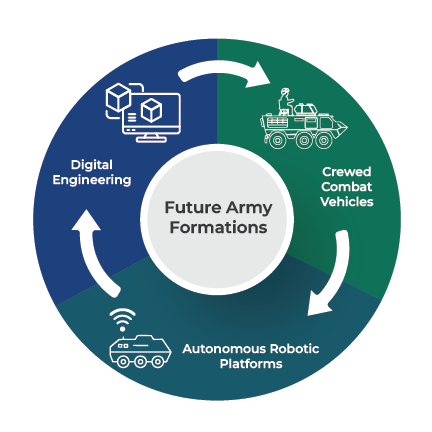
Future formations will no longer consist solely of increasingly sophisticated crewed combat vehicles operating independently. Instead, they will integrate advanced crewed platforms—including the modernized M1 Abrams and the future XM30 combat vehicle—with autonomous, robotic, and potentially attritable systems capable of operating collaboratively across increasingly complex missions.
The implications extend far beyond vehicle design.
These formations must evolve continuously throughout their operational lives.
Rather than waiting years to field entirely new platforms, future capability will increasingly depend upon rapid software updates, modular hardware improvements, evolving autonomous behaviors, and the seamless integration of new robotic teammates.
“We must now converge towards having a much more iterative process by which we create upgrades onto those platforms."
For Cadieux, this represents a fundamental shift in military modernization.
Large combat platforms remain long-term strategic investments, requiring years to design, manufacture, and field. Yet the capabilities carried by those platforms must evolve continuously to keep pace with changing operational demands, particularly software, autonomy, sensing, communications, and mission systems.
Digital engineering provides the mechanism that makes this possible.
By establishing a continuous engineering pipeline from concept development and experimentation through design, validation, manufacturing, deployment, sustainment, and modernization, digital engineering enables capabilities to evolve at operational speed rather than traditional acquisition timelines.
This approach also supports the Army’s industry innovation drivers.
“GVSC’s role is to apply digital engineering to integrate and de-risk commercial innovation for Army formations—not to replace the tools, technologies, or investment that industry brings to the mission.”
Equally important, that same digital engineering ecosystem enables rapid integration of entirely new robotic capabilities into future formations while ensuring that both crewed and autonomous systems evolve together rather than independently.
For Cadieux, the challenge is no longer simply building better vehicles.
It is creating an engineering ecosystem capable of continuously improving entire operational formations throughout their lifecycle.
Digital Engineering Meets Artificial Intelligence
The second transformation Cadieux described extends beyond defense and into the broader industrial landscape.
Through discussions with several major automotive manufacturers and technology companies, he has observed a significant shift in how leading organizations approach engineering innovation.
The most successful organizations are no longer viewing digital engineering as simply a collection of software tools.
Instead, they are combining decades of proprietary engineering knowledge with artificial intelligence, generative AI, large language models, and traditional digital engineering workflows to fundamentally change how products are conceived, designed, manufactured, and sustained.
“I have a significant amount of data, domain knowledge data, that I believe is going to create a competitive advantage if I take this data, combine it with my traditional digital engineering tools, and leverage the emerging capabilities that’s largely coming out of AI research."
That distinction, Cadieux argued, is becoming increasingly important.
Some organizations continue to rely primarily on successive generations of commercial engineering software.
Others are creating entirely new capabilities by integrating their own engineering expertise, historical datasets, operational knowledge, and AI-enabled reasoning into comprehensive digital engineering ecosystems.
Rather than asking how artificial intelligence can replace existing engineering workflows, these organizations are asking how AI can amplify decades of accumulated engineering knowledge.
According to Cadieux, that difference is rapidly becoming one of the defining competitive advantages across advanced manufacturing industries.
The implications for the Army are equally significant.
Success will depend not simply on adopting commercial digital engineering tools, but on integrating Army-specific operational knowledge, engineering expertise, mission data, and emerging AI capabilities into a unified ecosystem capable of supporting continuous modernization.
For the ARC community, this convergence presents an extraordinary opportunity.
Many of the enabling technologies have long been core areas of ARC research, including digital engineering, modeling and simulation, autonomy, artificial intelligence, and data-driven decision support. As these technologies mature and converge, they are creating new pathways for accelerating the transition of research into operational capability while fundamentally changing how future military systems will be engineered.
The Automotive Research Center as the Innovation Pipeline
For Cadieux, these converging trends point to a broader conclusion.
Digital engineering is valuable not simply because it accelerates engineering analysis or improves individual design tools. Its greatest value lies in connecting every stage of the capability development process into a continuous innovation pipeline.
That is precisely the role he believes the Automotive Research Center has played for more than three decades.
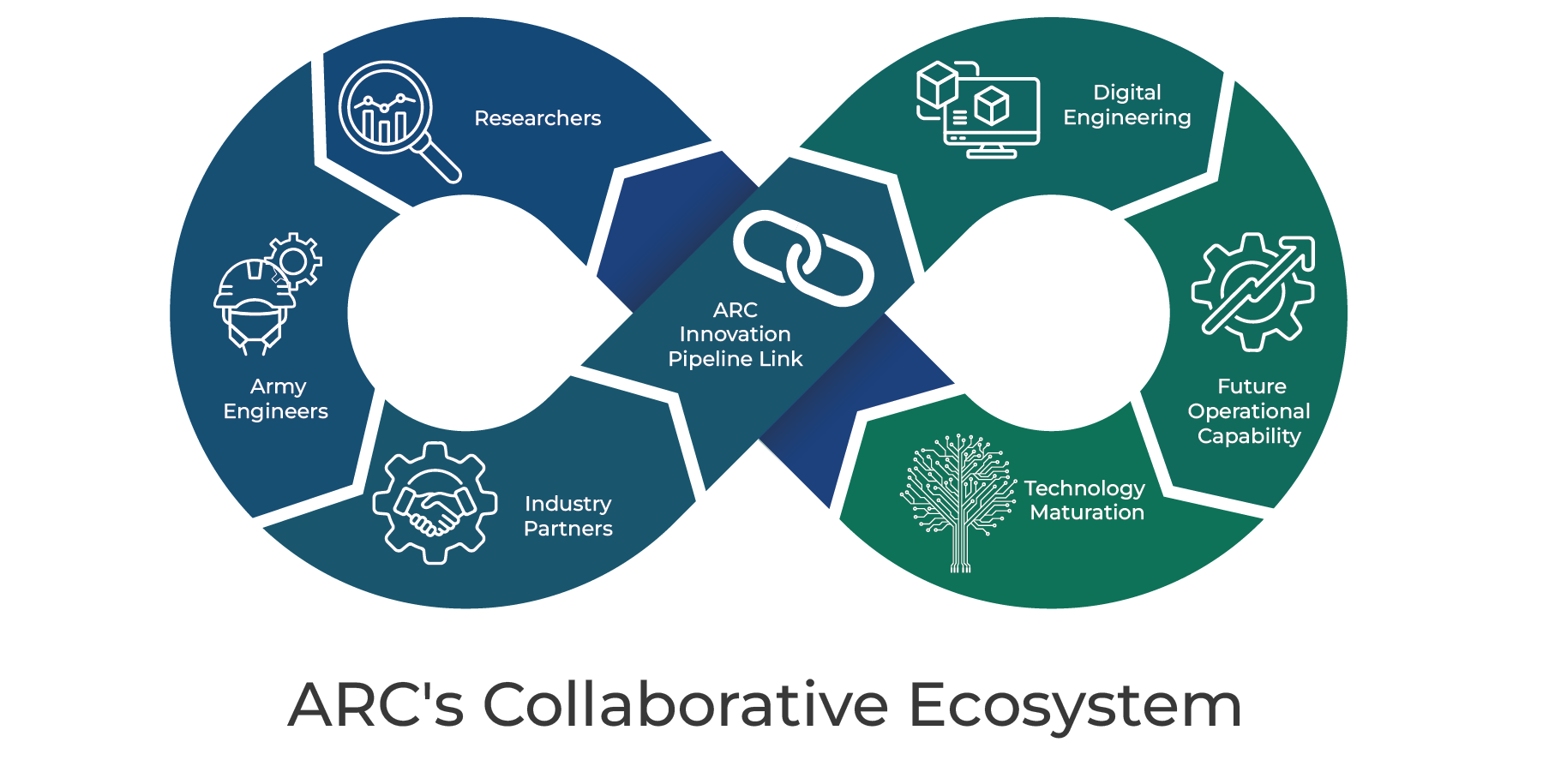
Rather than viewing the ARC simply as a collection of university research projects, Cadieux described it as an innovation ecosystem that connects fundamental research, engineering science, technology maturation, industrial practice, and operational capability into a continuous cycle of discovery and transition.
“That’s what’s so critical and that’s what’s powerful about the Automotive Research Center—is enabling that pipeline."
Within that ecosystem, fundamental research generates new scientific understanding. Industry transforms that knowledge into deployable technologies. Army engineers integrate those technologies into operational capability. Operational experience then generates the next generation of research questions, completing a continuous cycle of innovation that benefits every member of the partnership.
This perspective distinguishes the ARC from many traditional research organizations.
Rather than measuring success solely through publications or individual technical advances, the ARC emphasizes the complete lifecycle of innovation from scientific discovery to validated capability transition. The ARC’s research portfolio is thus designed not only to answer today’s scientific questions but also to establish the foundations for future operational capabilities.
Cadieux emphasized that this continuous pipeline must remain dynamic.
Emerging technologies such as artificial intelligence, foundation models, digital twins, and autonomous systems are evolving at unprecedented speed. The ARC provides an environment where these technologies can be evaluated, integrated, and matured alongside established modeling and simulation methods before they become part of future Army capabilities.
Equally important, the pipeline extends beyond government laboratories.
The knowledge generated within the ARC informs industrial innovation, supports university research and education, contributes to workforce development, and ultimately benefits the Army through accelerated technology transition. In this way, the ARC serves not only as a research consortium, but also as an enduring innovation ecosystem that continuously strengthens the nation’s engineering enterprise.
The Power of the Quad: Collaboration as a Strategic Advantage
While digital engineering formed the central theme of Cadieux’s remarks, he concluded by emphasizing another defining characteristic of the Automotive Research Center—its people.
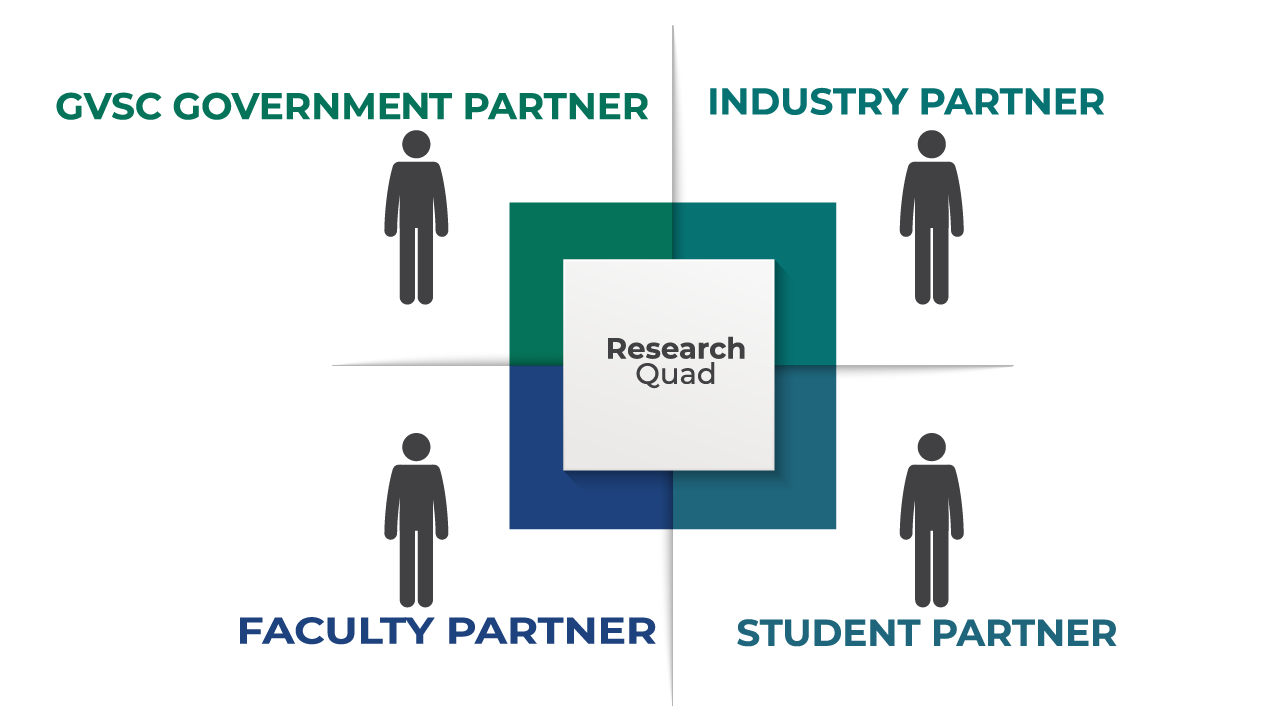
For more than three decades, the ARC has brought together university researchers, Army scientists, industry engineers, and graduate students within a collaborative framework known as the quad model. Rather than working sequentially, these communities define research questions together, guide projects together, and evaluate results together throughout the research lifecycle.
According to Cadieux, what the ARC community often regards as routine collaboration has become recognized across the Army as an innovative model for accelerating technology transition.
He recalled recent discussions with senior Army leaders during which the ARC’s collaborative structure immediately captured their attention.
“When we described that we have students, researchers, professors and faculty coupled with an industry partner, coupled with an engineer from the Army, you went from six hours in the conference room and they’re fading to all of a sudden they perk up. It was like, ‘Wait a minute—you are bringing together this unique set of individuals to collectively collaborate and work on something. I have not seen that before.'"
For Cadieux, that reaction confirmed something the ARC community has understood for years: breakthrough innovation is rarely the product of a single organization. It emerges when researchers, engineers, students, industry partners, and end users work together from the very beginning to solve shared challenges.
The strength of this approach extends well beyond individual projects.
It creates enduring professional relationships, accelerates knowledge transfer, strengthens workforce development, and ensures that scientific advances remain closely connected to operational needs and industrial practice. Students gain first-hand experience working alongside practicing engineers and Army researchers. Government scientists gain access to emerging ideas and academic expertise. Industry partners help identify practical pathways toward implementation. Together, these interactions create an environment where innovation is continuously reinforced through collaboration.
Cadieux also acknowledged the commitment required to sustain such a model. Many Army engineers participate in ARC projects in addition to their primary responsibilities, contributing their expertise because they recognize the long-term value of the partnership.
He expressed appreciation for their continued engagement, emphasizing that the success of the ARC depends upon the active participation of every member of the quad.
That collaborative culture has become one of the ARC’s defining strengths.
It transforms research from a collection of individual projects into a shared enterprise dedicated to advancing Army capability while simultaneously educating future engineering leaders and strengthening the nation’s broader innovation ecosystem.
ARC Director Perspective
Prof. Bogdan Epureanu, Director of the Automotive Research Center, noted that Cadieux’s remarks captured not only the urgency of digital engineering, but also the reason the ARC was established more than three decades ago.
“Director Cadieux articulated the most important mission of the ARC," said Epureanu. “Digital engineering is not simply about improving engineering workflows. It is about creating a continuous innovation pipeline that transforms research into operational capability. Through sustained collaboration among Army researchers, universities, industry partners, and students, the ARC provides an environment where new scientific ideas can mature into technologies that strengthen future Army capabilities."
Epureanu emphasized that the ARC’s research philosophy has always been centered on solving problems that are too complex for any single discipline or organization. Today’s challenges such as adaptive autonomy, AI-enabled digital engineering, human-machine teaming, digital twins, intelligent power systems, and fleet-level systems integration require expertise that spans engineering, computer science, human factors, manufacturing, operations research, and defense applications.
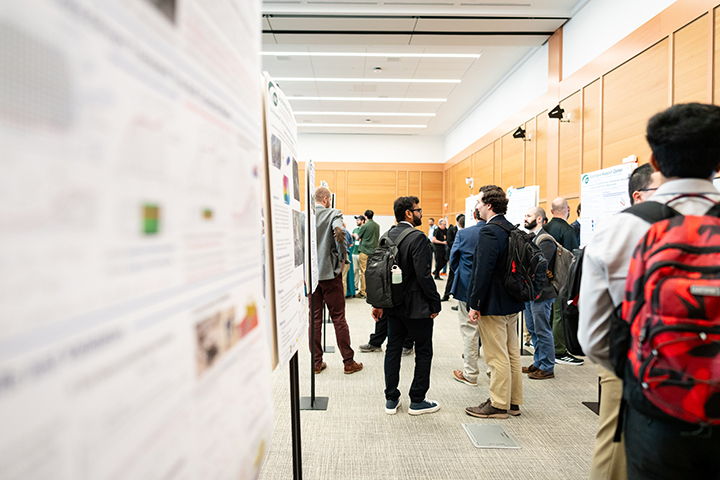
He noted that the Annual Program Review itself reflects this collaborative philosophy by bringing together researchers, government partners, industry representatives, and students to exchange ideas, evaluate progress, and identify the next generation of scientific challenges together.
“Every year, the Annual Program Review provides an opportunity to demonstrate not only what we have accomplished, but also how we work," Epureanu said. “The ARC succeeds because collaboration is built into every project from the very beginning. That culture allows us to move beyond individual research results toward integrated capabilities that address real operational needs."
A Shared Vision for the Future
Dr. David Gorsich, Chief Scientist of the U.S. Army Ground Vehicle Systems Center, noted that Cadieux’s remarks reinforce a broader transformation taking place across engineering, modeling and simulation, and Army modernization.
“The complexity of future ground systems requires more than better individual technologies," said Gorsich. “It requires an adaptable, flexible and fast ecosystem capable of integrating scientific discovery, engineering innovation, operational understanding, and workforce development. That collaborative ecosystem is one of the ARC’s greatest strengths.”
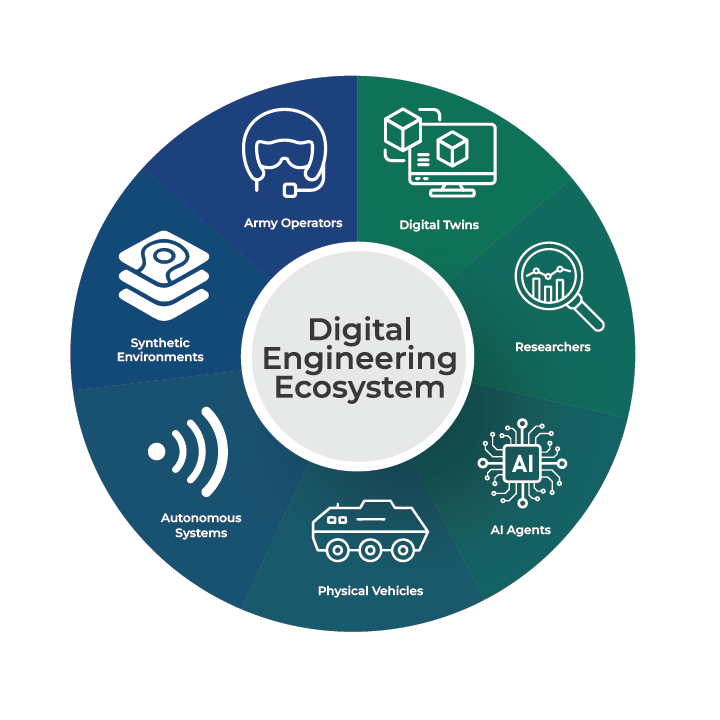
Gorsich observed that the challenges facing the Army today differ fundamentally from those of previous decades. Modern ground systems increasingly combine physical platforms, intelligent software, autonomous behaviors, human operators, and rapidly evolving data environments into highly interconnected systems. Understanding and managing that complexity requires advances not only in computation, but also in the way engineering knowledge is created, shared, validated, and transitioned.
He noted that many of the concepts attracting significant attention today build upon decades of research in modeling and simulation, including reduced-order modeling, surrogate models, digital twins, AI-assisted engineering, and foundation models. The ARC has long contributed to that scientific foundation and is now helping shape how these emerging technologies can be integrated into future Army capabilities.
As artificial intelligence, advanced digital engineering, and autonomous systems continue to reshape both industry and defense, the ARC remains uniquely positioned to help translate these advances into practical engineering solutions through sustained collaboration among government, academia, and industry.
Building Tomorrow’s Army Capabilities Today
Throughout his remarks, Cadieux returned repeatedly to a single idea.
Digital engineering is valuable not because it produces better computer models.
It is valuable because it enables continuous innovation.
Future Army capability will depend upon an engineering ecosystem capable of rapidly incorporating new scientific discoveries, integrating emerging technologies, validating new concepts, and delivering operational capability at a pace consistent with technological change.
For the Automotive Research Center, that challenge represents both its mission and its opportunity.
For more than thirty years, the ARC has advanced the science of modeling, simulation, and digital engineering. Today, as artificial intelligence, autonomy, foundation models, and data-driven engineering reshape both industry and defense, the ARC is expanding that foundation into a fully integrated ecosystem capable of supporting the next generation of Army transformation.
As Cadieux concluded, the ARC’s greatest contribution is not simply the research it produces today.
It is the innovation ecosystem it sustains for tomorrow.
By bringing together Army engineers, university researchers, industry partners, and students through continuous collaboration, the ARC creates an environment where new ideas evolve into operational capabilities faster, more efficiently, and with greater confidence than would otherwise be possible.
As digital engineering, artificial intelligence, autonomous systems, and advanced manufacturing continue to transform both defense and industry, the ARC remains uniquely positioned to help the Army modernize at the speed demanded by future operational environments.
For more than three decades, the ARC has anticipated the future of engineering. The next chapter will be defined not simply by better models, but by transforming those models into mission-ready capabilities through collaboration, innovation, and a shared commitment to advancing the future of Army ground systems.