

Beyond Collaboration: Engineering the Next Generation of the Army Innovation Ecosystem
Artificial intelligence is transforming not only how engineering is performed, but also how innovation itself must be organized.
For decades, the U.S. Army, universities, and industry have collaborated to advance new technologies. Today, however, the emergence of AI, foundation models, digital engineering, and increasingly data-driven research raises a broader question:
Can the innovation ecosystem itself be engineered?
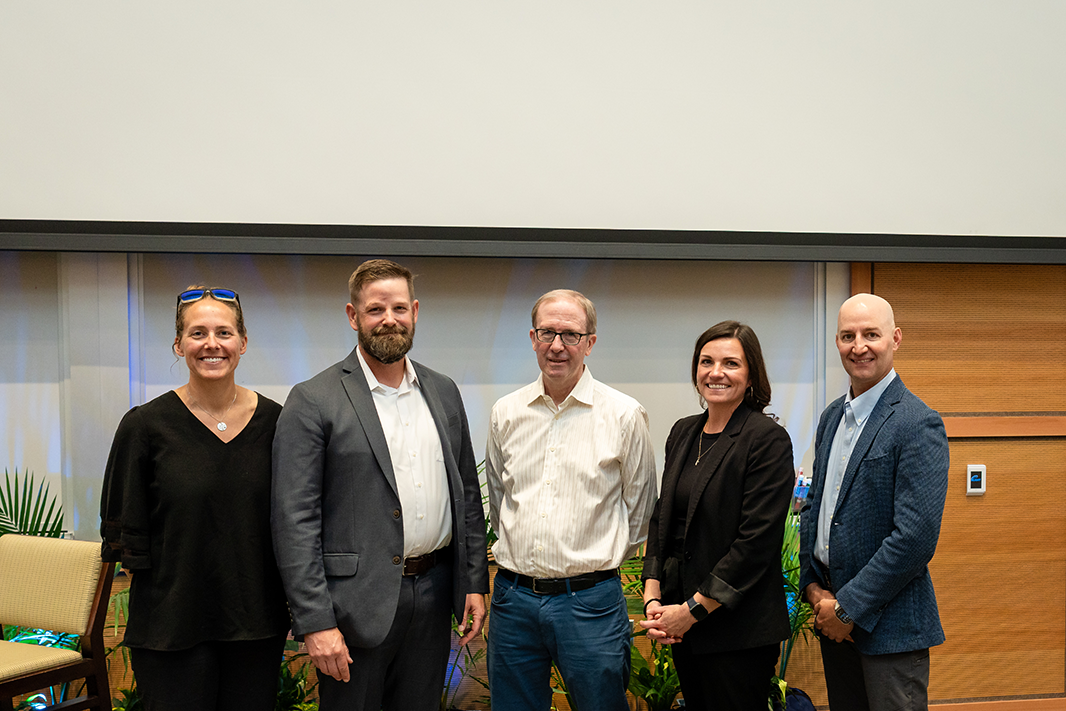
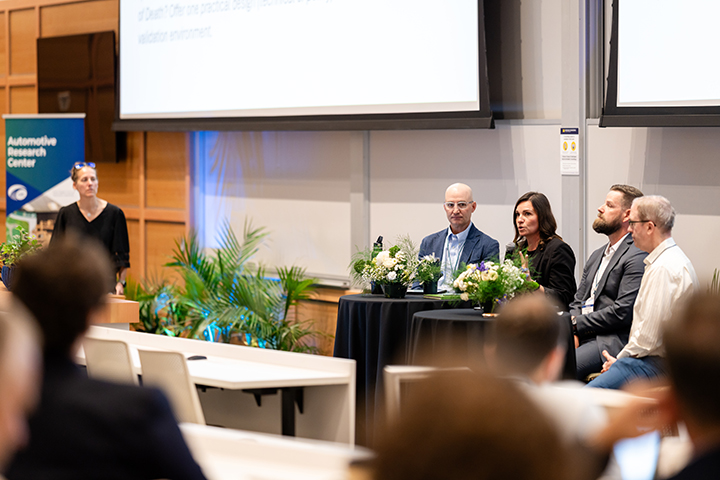
That question became the centerpiece of one of the most thought-provoking discussions during the 32nd Automotive Research Center (ARC) Annual Program Review in Ann Arbor, Michigan. Moderated by Professor Kira Barton, Associate Director of the ARC, the panel brought together leaders from government, academia, industry, and the National Advanced Mobility Consortium (NAMC) to examine how future partnerships must evolve to deliver capability at the speed demanded by modern warfare.
Rather than focusing on individual technologies, the discussion examined the architecture of innovation itself.
How should government, academia, and industry share data while protecting sensitive information?
How can they reduce the time required to transition research into operational capability?
How should organizations with fundamentally different missions and incentives collaborate effectively?
Barton framed the discussion around three interconnected challenges: the Data Paradox, the Velocity Gap, and the Incentive Misalignment. Collectively, these themes explore how future innovation ecosystems must be intentionally designed—not simply inherited from past models.
The Data Paradox
The first challenge addressed one of the defining tensions of the AI era. Artificial intelligence depends upon access to high-quality data. National security depends upon protecting that same data. How can both objectives be achieved simultaneously? The panelists agreed that openness and security should not be viewed as competing objectives.
Instead, they argued that future digital engineering environments must be deliberately engineered to support both.
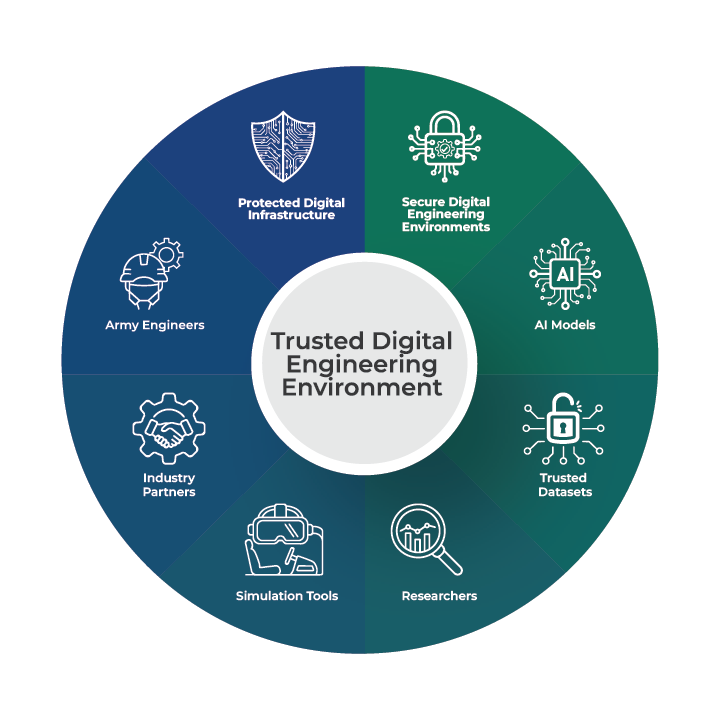
Jillyn Alban, Associate Director of Ground Vehicle Robotics at the U.S. Army Ground Vehicle Systems Center (GVSC), emphasized that trusted digital engineering environments will become essential for accelerating AI-enabled capability development while maintaining appropriate security and oversight.
Rather than repeatedly rebuilding validation environments as technology evolves, Alban advocated for trusted, modular digital engineering pipelines capable of incorporating new AI techniques while preserving confidence in safety, interoperability, and mission performance. ”We have to establish protected yet accessible enclaves, curated versioned data sets hosted within a secure digital test bed with you know kind of strict access control and audit trails” she explained, describing pipelines that allow government and industry to collaborate without compromising data protection requirements.
Such environments, she argued, would allow researchers to train, evaluate, and improve AI systems using realistic operational data while maintaining rigorous cybersecurity, export-control compliance, and validation standards.
Scott James, President and CEO of Applied Dynamics International, expanded upon that idea from an industry perspective.
Rather than viewing openness and security as mutually exclusive, he argued that properly engineered digital engineering architectures can provide both.
Open software architectures, secure computing environments, governed interfaces, and cyber-hardened infrastructure enable collaboration while protecting sensitive information.
For James, the challenge is not whether information should be shared. The challenge is designing architectures that determine how information should be shared.
“My view is that this is a false choice if the architecture is engineered correctly," he observed.
Prof. Todd Allen, Associate Dean for Research at the University of Michigan College of Engineering, approached the issue from another perspective. He suggested thinking about data the same way researchers have long thought about major scientific user facilities.
Historically, universities and national laboratories have invested in sophisticated experimental equipment shared by broad research communities under carefully managed access policies. Allen argued that high-quality engineering datasets should increasingly be treated in the same way. Rather than viewing data simply as digital information, institutions should recognize curated datasets as shared research infrastructure requiring sustained investment, stewardship, quality assurance, and appropriate access controls. “We need to think of data the same way we used to think about pieces of equipment,” he explained.
That perspective represents a significant shift in how engineering research may be organized in the future. Data becomes not merely an input to research, but a strategic research infrastructure requiring dedicated investment, governance, and long-term management.
Beyond Sharing Data: Building Trust
Although the discussion centered on technology, the panel repeatedly returned to a broader conclusion.
Trust cannot be created through software alone. Trusted innovation requires trusted infrastructure, trusted governance, trusted partnerships, trusted processes allow researchers, industry, and government to collaborate confidently while protecting the information upon which future military capability depends. That observation established the foundation for the panel’s second major theme: How can innovation move fast enough to remain relevant?
Closing the Velocity Gap
If trusted data provides the foundation for future innovation, speed determines whether that innovation reaches the Soldier before the battlefield changes again.
The panelists agreed that one of the greatest challenges facing the Army innovation ecosystem is not the absence of promising technologies, but the difference in the pace at which government, academia, and industry naturally operate.
Commercial technology companies routinely iterate on software in months or even weeks. Universities often measure progress through multi-year research programs and publication cycles. Defense acquisition has traditionally operated on timelines measured in years. Artificial intelligence is rapidly exposing the tension between those different rhythms.
Barton described this challenge as the Velocity Gap—the growing disconnect between the speed of technological innovation and the speed of capability integration.
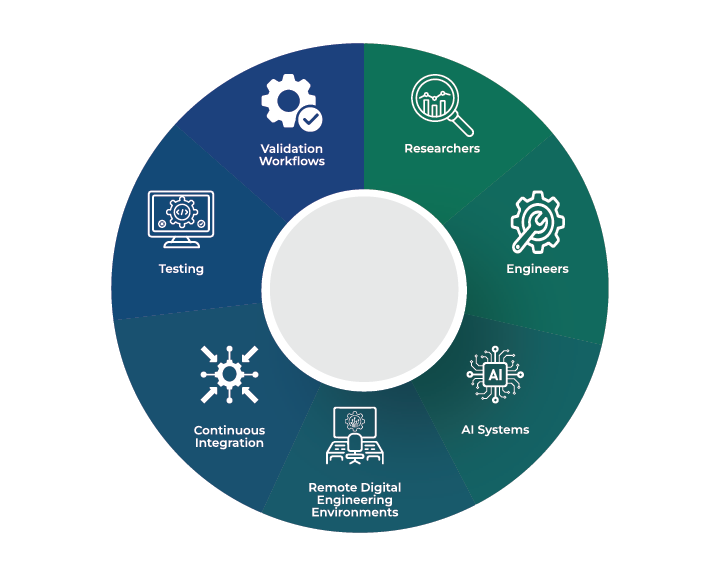
For Alban, reducing that gap begins with rethinking how technologies move from research laboratories into operational systems. Rather than waiting until the end of development to evaluate and integrate new capabilities, she argued that validation must become a continuous process supported by trusted digital engineering environments.
“Delivering capability at the speed of relevance is only possible through AI engineering, eliminating the valley of death, cultivating homegrown talent, and fostering partnerships.” She emphasized that trusted digital pipelines must allow researchers, developers, acquisition organizations, and operational users to evaluate emerging technologies continuously rather than sequentially. Validation, verification, and integration should evolve alongside the technology itself.
That philosophy mirrors broader trends occurring across software engineering, where continuous integration and continuous deployment have replaced infrequent major releases.
James described how similar ideas are reshaping advanced aerospace testing and digital engineering. Remote access to sophisticated engineering infrastructure no longer serves only convenience. It enables distributed engineering teams, continuous integration, automated testing, and increasingly, artificial intelligence. He described how secure digital engineering platforms now allow engineers, simulation environments, physical test assets, and AI agents to collaborate through common interfaces regardless of geographic location. The same infrastructure that enables distributed human collaboration also enables intelligent software agents to participate directly in engineering workflows. For James, remote connectivity, digital engineering, and AI are therefore not separate technologies. They are components of the same evolving engineering ecosystem.
Colonel (retired) Warren Sponsler, Chief Operating Officer of the National Advanced Mobility Consortium (NAMC), reinforced the importance of accelerating technology transition from an acquisition perspective.
Sponsler observed that today’s operational environment leaves little tolerance for prolonged modernization cycles. Capabilities must reach operational users far more rapidly than traditional acquisition models allowed.
“Speed to delivery is probably the most important thing […] because of the operating environment that I think our military infrastructure and our military leaders are seeing around the world.”
At the same time, Sponsler emphasized that rapid delivery cannot come at the expense of interoperability or long-term engineering quality. Digital engineering therefore becomes essential not only for accelerating capability development, but also for enabling continuous integration of new technologies after systems have already been fielded.
The discussion highlighted an important distinction. The objective is no longer simply to accelerate research. It is to accelerate the entire innovation lifecycle, from scientific discovery through engineering validation, acquisition, deployment, sustainment, and continuous modernization.
Aligning Incentives Across the Innovation Ecosystem
Even if trusted data and rapid engineering pipelines can be established, another challenge remains. Government, Academia, and Industry measure success differently.
Barton described this as the Incentive Misalignment. Universities value scientific discovery, publications, education, and openness. Industry prioritizes commercialization, productization, intellectual property, and return on investment. Government emphasizes operational effectiveness, integration, reliability, and sustainment. The panel agreed that future innovation ecosystems must recognize these differences rather than attempt to eliminate them.
Universities do not exist solely to produce technologies. They train engineers, scientists, and future leaders who will sustain innovation after individual research projects conclude.
As engineering increasingly expands into secure environments involving controlled datasets, protected digital infrastructure, and sensitive national security applications, Allen argued that universities must also rethink how they evaluate faculty contributions.
Traditional academic incentives emphasize publications and openly disseminated research. Future research ecosystems, however, may increasingly involve important work that cannot always be discussed publicly. Universities need new ways to recognize meaningful scientific contributions made within secure research environments while preserving the openness that remains central to academic discovery.
James approached the same issue from industry. He argued that all three communities ultimately share a common objective: creating value. The definition of value differs. Industry measures return on investment through commercial success. Government measures value through operational capability. Universities measure value through education and scientific advancement. Recognizing those different forms of return allows collaboration to become complementary rather than competitive.
Sponsler reinforced that perspective from the consortium viewpoint. Organizations such as NAMC exist precisely to create environments where those different incentive structures can work together rather than compete.
By connecting government agencies, universities, established defense contractors, startup companies, and commercial technology firms around shared operational challenges, the consortium model enables innovative ideas to mature regardless of their origin.
For Sponsler, the objective is straightforward: The best capability should reach the warfighter regardless of whether it originates in academia, industry, or government. That philosophy closely mirrors the collaborative model that has defined the ARC for more than three decades. Rather than aligning organizational boundaries, both the ARC and NAMC align around solving difficult problems.
The panel concluded that future innovation ecosystems must be intentionally designed to support these different perspectives while preserving the strengths each community contributes: trust, speed, and shared incentives.
Together they form the architecture upon which future Army innovation will depend.
Engineering the Innovation Ecosystem
As the discussion drew to a close, one conclusion emerged repeatedly across all four panelists: Future Army innovation will depend not only on engineering better technologies, it will depend on engineering for a better innovation ecosystem.
The panelists approached this challenge from different perspectives. Government emphasized trusted digital engineering environments, operational relevance, and capability transition. Industry highlighted open architectures, reusable digital infrastructure, AI-enabled engineering workflows, and rapid technology integration. Academia focused on cultivating talent, advancing fundamental science, and creating new models for evaluating research conducted within increasingly secure and data-driven environments.
Despite these different viewpoints, the discussion revealed remarkable convergence. Future innovation ecosystems must be:
- Trusted, through secure yet accessible digital engineering environments.
- Connected, through common digital infrastructures and interoperable engineering tools.
- Collaborative, by integrating government, academia, industry, and operational users from the beginning.
- Adaptive, evolving continuously alongside advances in artificial intelligence, digital engineering, and operational requirements.
Just as engineers intentionally design aircraft, autonomous systems, or digital twins, future innovation ecosystems must also be intentionally designed to support continuous learning, rapid technology transition, and enduring partnerships. The panel suggested that collaboration itself should no longer be viewed as an organizational arrangement. It should become an engineered capability.
ARC Director Perspective
Prof. Bogdan Epureanu, Director of the Automotive Research Center, observed that the panel addressed a question that extends beyond any single research project or technology.
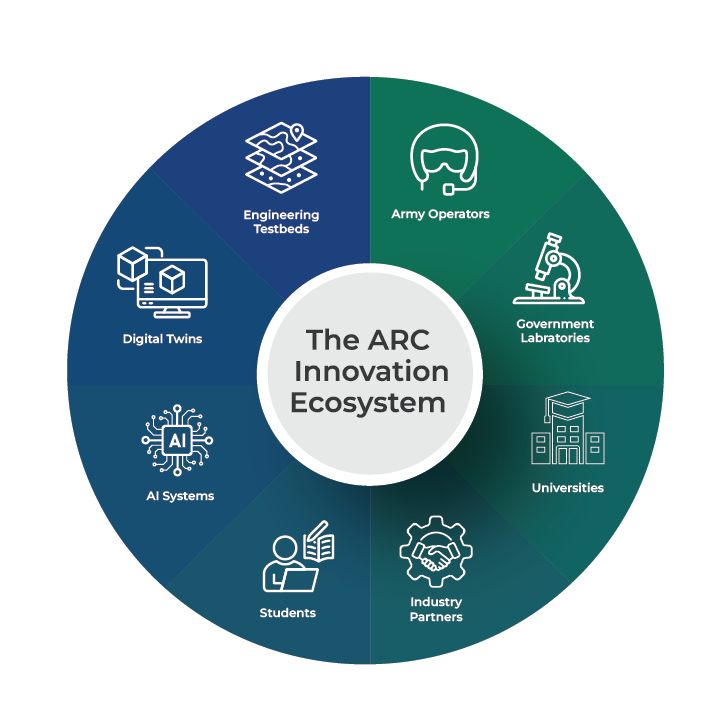
“The discussion challenged us to think beyond engineering individual solutions," said Epureanu. “Future success will depend upon engineering the innovation ecosystem itself. That means creating an environment where universities, government laboratories, industry partners, and students can work together continuously to transform scientific discovery into operational capability. That philosophy has guided the ARC since its founding more than three decades ago."
Epureanu noted that the ARC’s collaborative structure already reflects many of the principles discussed throughout the panel.
By bringing together Army scientists, academic researchers, industry engineers, and graduate students within every project, the ARC creates opportunities for ideas to mature collaboratively rather than sequentially.
As artificial intelligence, digital engineering, and autonomous systems continue to reshape engineering practice, that collaborative model becomes even more important.
GVSC Perspective
Dr. David Gorsich, Chief Scientist of the U.S. Army Ground Vehicle Systems Center, noted that the panel demonstrated how future engineering challenges extend beyond technology alone.
“Advancing digital engineering and artificial intelligence requires more than developing new algorithms or better models,” said Gorsich. “It requires trusted data, shared infrastructure, collaborative research environments, and sustained partnerships capable of translating scientific discovery into operational capability. The ARC provides exactly that kind of ecosystem.”
He emphasized that future military systems will become increasingly interconnected, making collaboration across organizations as important as innovation within individual disciplines.
Beyond Collaboration
Rather than producing a specific recommendation or technical solution, the discussion resulted in a shift in perspective among participants. For decades, collaboration among government, academia, and industry has been viewed primarily as an organizational necessity. The panel suggested something much more ambitious.
Future military innovation will require collaboration to become an engineered system supported by trusted data, secure digital infrastructure, AI-enabled engineering, shared experimentation, aligned incentives, and continuous learning.
That transformation mirrors the broader evolution taking place across engineering: products are becoming ecosystems; platforms are becoming formations; research is becoming continuous capability development. Innovation itself is becoming a discipline that must be intentionally designed.
For more than thirty years, the Automotive Research Center has demonstrated how sustained partnerships among the Army, universities, industry, and students can accelerate scientific discovery and technology transition.
As artificial intelligence and digital engineering continue to reshape the engineering landscape, the ARC now stands at the center of an even broader opportunity. Not simply to engineer the technologies of the future, but to help engineer the innovation ecosystem that will create them.