

Digital engineering, autonomous intelligent systems on display at ARC Annual Program Review
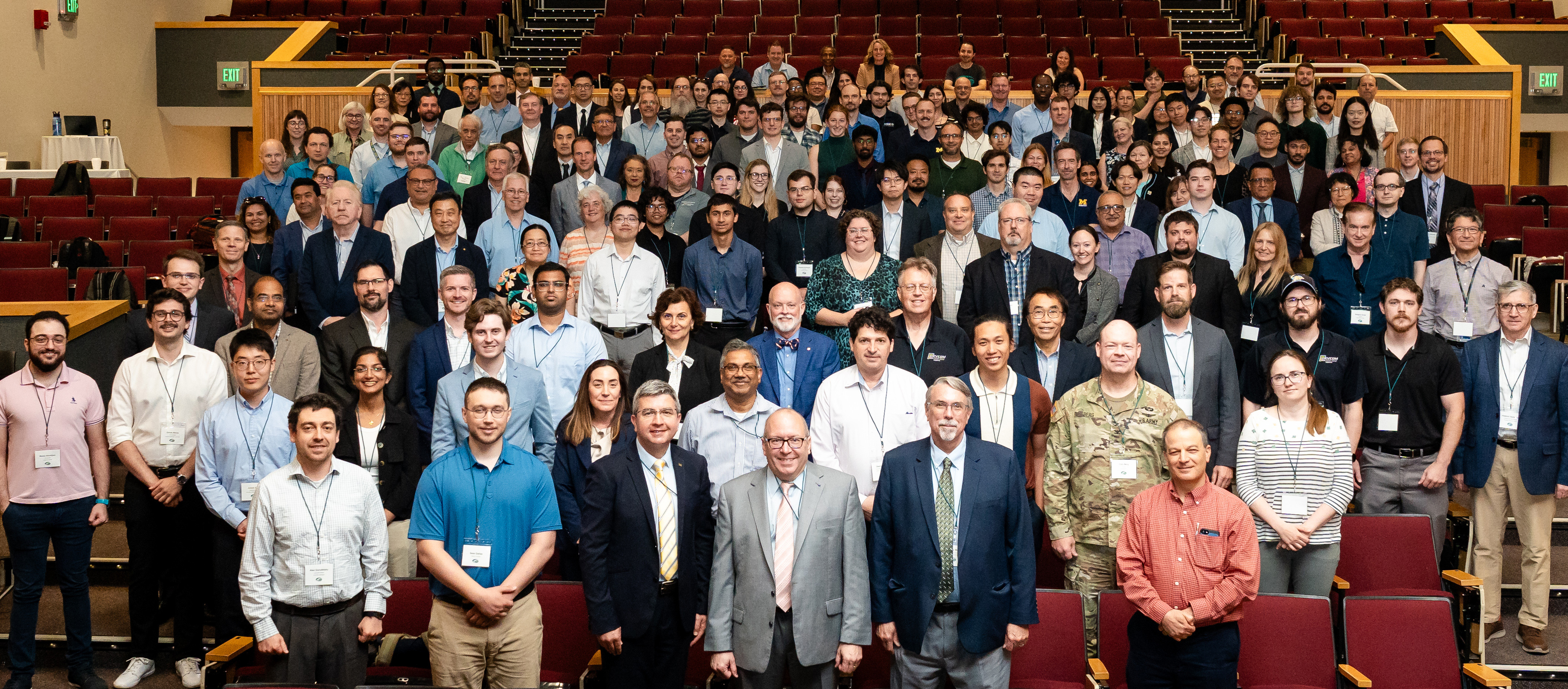
The Automotive Research Center’s 31st Annual Program Review brought more than 250 leaders from the U.S. Army, industry, and universities to Ann Arbor, Michigan, with a single goal: move science to soldiers, faster.
Led by the University of Michigan (U-M), the Automotive Research Center (ARC) is the U.S. Army Center of Excellence for ground systems. Founded in 1994, the center focuses on basic scientific problems associated with ground vehicles, including autonomy, management of vehicle power and energy, mobility, and survivability of the complete vehicle system.
Hosted by ARC and its partner, the U.S. Army DEVCOM Ground Vehicle Systems Center (GVSC), the Annual Program Review focused on mission readiness and the ability to deliver reliable, tested technology to soldiers and human-machine teams that can be trusted. This accomplishment was made by utilizing digital engineering, with emphasis on the use of computer models and Artificial Intelligence to design and test U.S. Army vehicles faster and more accurately.
Speakers included Dr. Arthur Lupia, vice president for research and innovation at U-M, and David Gorsich, chief scientist, U.S. Army DEVCOM GVSC, underscoring the ARC–GVSC partnership and the shared emphasis on speed with discipline—design smarter, test earlier, integrate across domains, and deliver capabilities that commanders can trust.
“The 2025 ARC Annual Review showed what’s possible when science, defense, and education come together,” said ARC Director Bogdan Epureanu, the Roger L. McCarthy Professor of Mechanical Engineering and a U-M professor of electrical engineering and computer science. “The ARC is building smarter, more capable military vehicles faster and more efficiently, while also creating pathways for students and researchers to directly impact national defense.”
Keynote addresses: technological advancement, economic logic, and digital ingenuity
Brigadier General Scott Meyers, assistant adjunct general – initiatives at the Michigan National Guard (MING), and Bruce D. Jette, president and CEO of Innvistra, LLC, delivered keynote addresses at the event.
“In today’s threat environment, we cannot wait a decade to field new technology,” Meyers said. “We must radically shorten the cycle from concept to combat.”
Meyers emphasized the bidirectional role ARC has in bridging its foundational research to field integration. MING’s All-Domain Warfighting Center and large-scale exercises, such as Northern Strike, have proving grounds where ARC tests vehicle prototypes to face operational pressures early.
“The ARC doesn’t operate in a vacuum,” he explained. “It listens, it responds, and it prototypes with speed, integrating with GVSC and MING to ensure transition is not an afterthought, but a design principle. This is not just a center of academic excellence, it’s a partner in building combat advantage.”
Developing and testing prototypes also includes the economic advancements by ensuring time is spent on solving the right problems first and doing so in an economically conscious way.
Jette’s keynote address, “Defense Economics Drives Digital Design and Opportunity for the Knowledgeable and Creative,” called for digital-first, economically disciplined, and human-centered technological advancements.
“The ARC proves that when knowledge and creativity are backed by discipline and direction, the Army gets better answers—faster and cheaper,” he noted. “We must program systems not only to solve problems, but to understand and frame the right ones.”
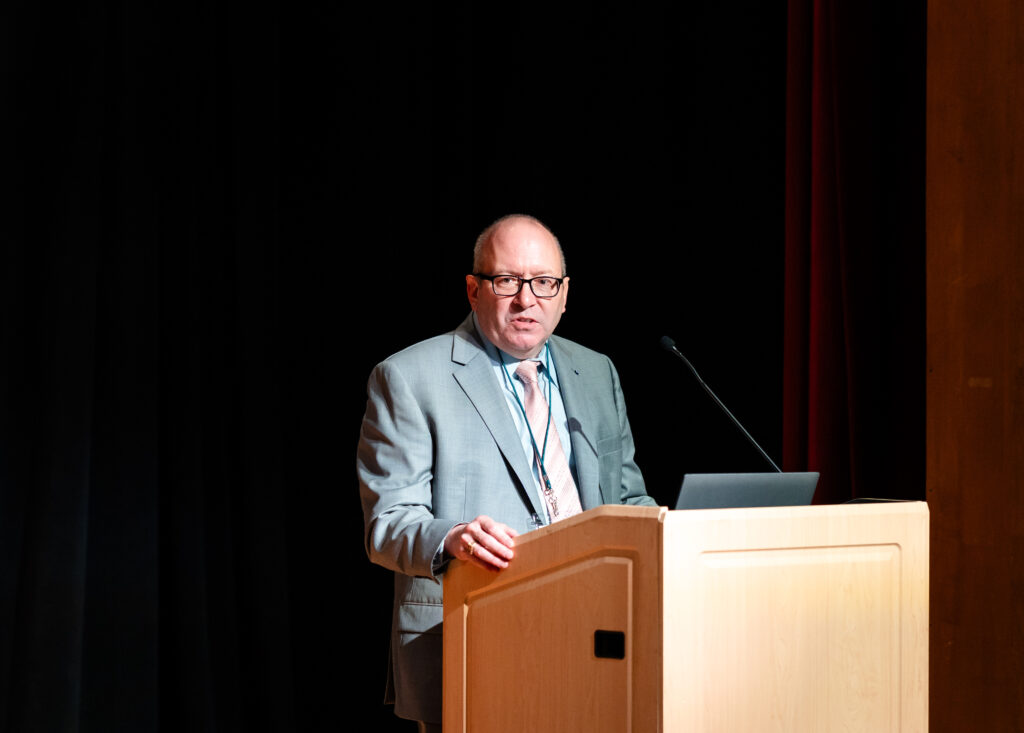
Dr. David Gorsich, Chief Scientist at the U.S. Army GVSC
Forging new paths in the digital age
The marquee debate on the second day of the event weighed the benefits and challenges of utilizing digital engineering, one primary area of focus for ARC, to accelerate the development of new military vehicle technologies.
“The Army is investing in digital engineering not just to modernize, but to revolutionize how we design, test, and deliver future systems,” Gorsich said during the debate.
Points were made on the benefits of using digital engineering to better understand what is possible or wasteful in physical prototyping, and how it enables research to progress faster.
Adding to the conversation, Alan Taub, U-M professor of mechanical engineering and materials science and engineering, emphasized the importance of physical testing in product development.
“History shows us that every breakthrough still had to be physically tested to be trusted. That’s not a limitation, it’s wisdom,” Taub said.
In the end, the point of the debate was not about taking sides or having a winner; it was about provoking questions on how systems are developed and how development can be done better as technology in research fundamentals advances.
Students at the center of the mission
As part of the Annual Review, ARC recognized student excellence through the ARC Excellence in Research Award (ARC-ERA) and Best Student Poster Competition.
“Supporting and recognizing these students is critical for sustaining innovation within the Army enterprise,” said Gorsich.
Award winners:
- ARC-ERA: Devavrath Raghunath, U-M Mechanical Engineering Master’s student
- Best Student Posters (co-winners): James Baxter, U-M Mechanical Engineering PhD candidate; Oakland University students Andrea Macklem-Zabel, Solaf Athamnah, and Absalat Getachew
More information about the award winners can be found in this July 29 article.
Looking to the future
Throughout the Annual Review, ARC demonstrated how its efforts and research directly impact the U.S. Army’s ability to solve practical challenges and improve soldier safety with mission-ready, cost-effective vehicles.
In support of the U.S. Army’s digital transformation goals, ARC aims to make digital design the standard for U.S. Army vehicles, replacing slow, costly, and risky trial-and-error methods with simulation-driven development.
“The technologies you are all spearheading will help prepare our military for the battlefield of the future,” said U.S. Senator Gary Peters in an address during the Annual Review.
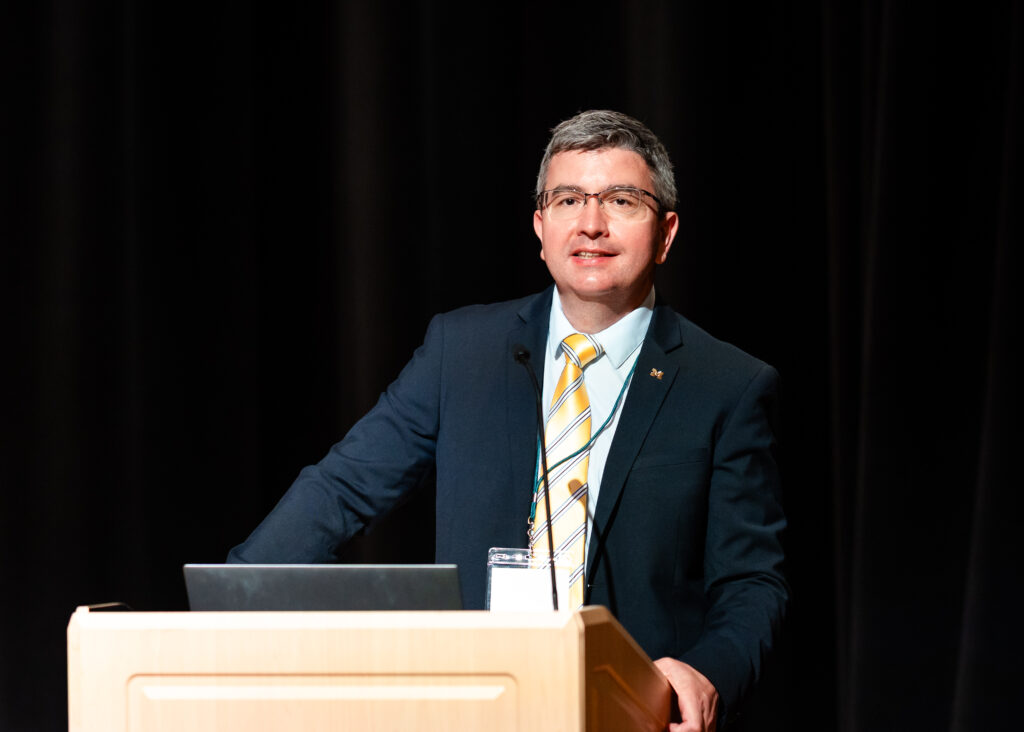
Prof. Bogdan Epureanu, Director of the Automotive Research Center
The ARC’s future efforts include AI-powered automation, which enables vehicles and systems to adapt during missions without human intervention, and system-level integration, where the ARC helps manage entire fleets of vehicles, energy use, and battlefield coordination.
Technological improvements won’t be the ARC’s only emphasis. There are plans to pursue workforce development efforts at partner universities, helping to train the next generation of engineers who understand both defense needs and emerging technologies.
“The ARC is where science meets the critical soldier needs,” said Epureanu. “Our mission is not just discovery, it’s warfighter-centric delivery through strategic academia-government-industry partnerships.”
Participating institutions include: the University of Iowa; Wayne State University; Clemson University; Oakland University; Virginia Tech; Michigan Technological University; Mississippi State University; the University of Alabama at Birmingham; the University of California, Irvine; George Mason University; Central Michigan University; Michigan State University; Worcester Polytechnic Institute; and University of Central Florida.